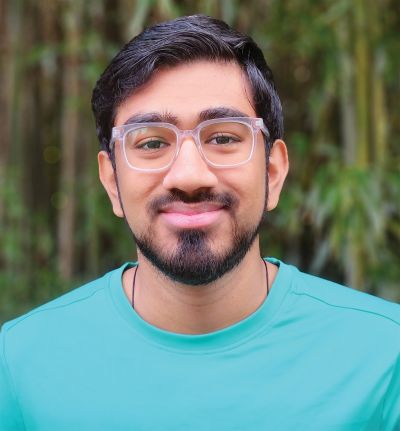
 For those of us living in a winter wonderland of snow and ice in cold weather months, road salt can be both a welcome and necessary part of traveling safely. Muqarib Anwar, who recently graduated from AGNR with an Environmental Science and Technology degree is investigating its dark side, looking for solutions to salinity pollution caused by road salt contamination into drinking water.
“My experience in ecotechnology has been trying to use environmental solutions to solve human problems,” Anwar said. “Salinity (the amount of dissolved salts in a body of water) is a really bad issue. We are dumping more and more salt on the roads, which ends up in the waterways.”
Through his work at the Biogeochemistry Kaushal Lab at UMD, which focuses on the ecology of watersheds and aquatic systems, Anwar took water samples from the Northeast Branch Anacostia River, Paint Branch Creek, and Campus Creek to analyze different chemical properties of the water. He also measured aspects like pH, salinity, and dissolved oxygen to search for trends across months and years, and found that waterways were in bad shape.
“It's really important to keep the salt level in the water low for our benefit and for the overall ecosystem,” he said. “More salt could mean less drinkable water and destabilizing environments where plants and fishes are adjusting to specific salinities.”
His research also suggested that specific conductance and total dissolved solids, which are both important water quality indicators, tended to coincide with increasing salinity. Plus, he found that dissolved oxygen and total nitrogen can provide insight into biological and nutrient processes in the stream, which is extremely important for a healthy waterway.
“I’m trying to think of the most sustainable way to tackle these issues,” Anwar said. “What if we use phytoremediation right by the streams’ rain gardens to uptake the salinity?”
Phytoremediation, which uses plants to absorb and capture pollutants like excess salinity, stream restoration by planting natural buffers, and adjusting the flow of water are just some of the strategies he came up with throughout the semester. Additional strategies included investigating urban stormwater infrastructure, such as bioswales, rain gardens, and green roofs, that can limit the amount of salt that enters the water.
The data he collected will contribute to future research within the lab and Anwar hopes that his work will motivate the next round of interns to advance sustainable practices.
“I hope that my experience here at UMD, doing environmental science with a specific focus on eco-tech and sustainability will allow me to look at the world in a different way,” Anwar said. “I really love doing research.”
by Mara K. Bell
